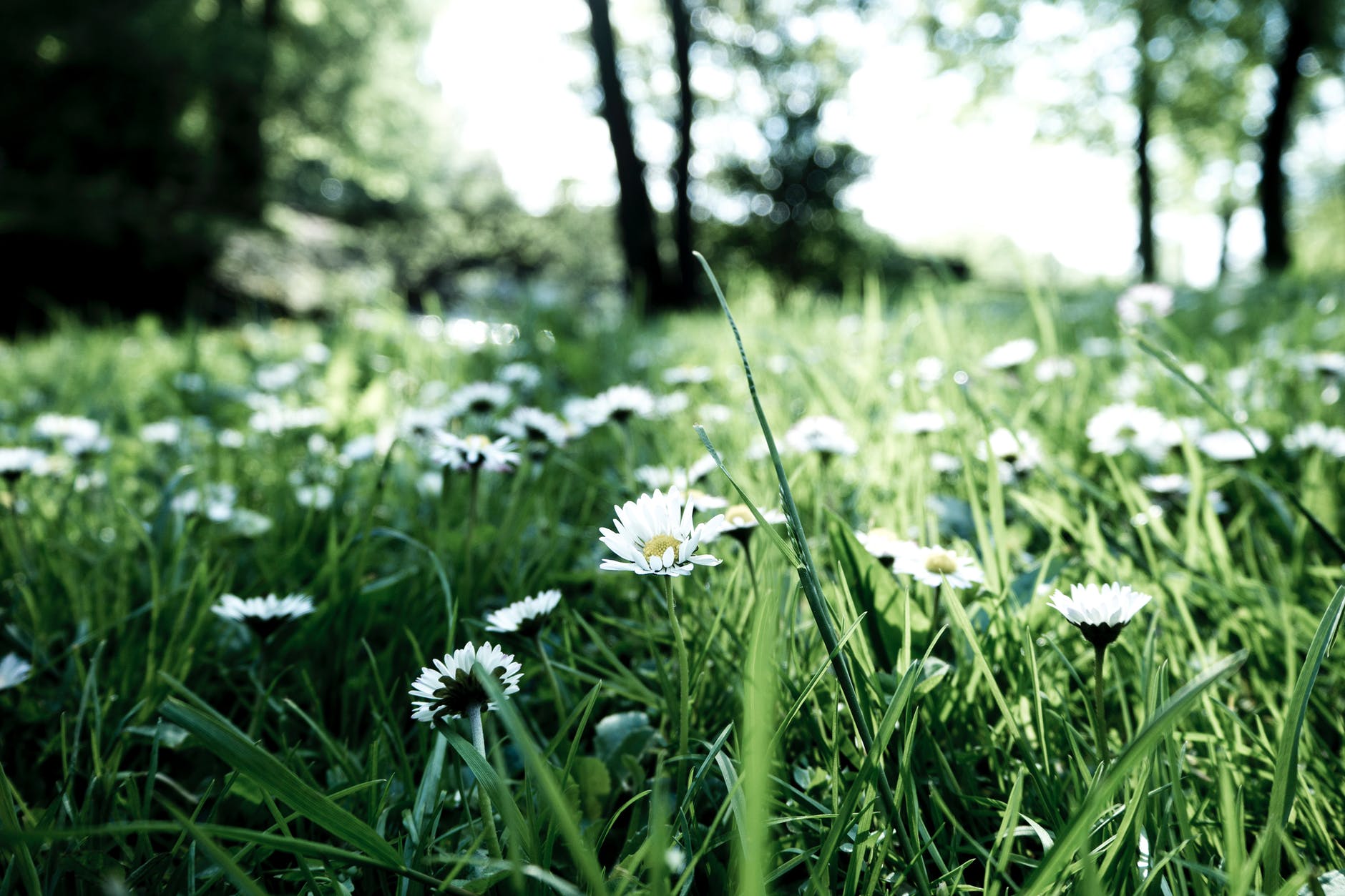
Terra mater
Gardening with mom. More like moving rocks and getting bossed around in the dirt, but I undertake it willingly on this New England weekend home. We are moving one garden, actually, from the back yard where it has happily sprawled these past 40+ years to the front yard. New septic system going in this fall, going to come right through here, gotta move those hellebore and and hostas…. “Can’t let them tear up my beautiful lilies!” (Lilium candidum)
And so we begin—with the ring of stones that edges the garden, some bigger than your front step, suitably softened and aged, nestled in like new birds with the various plantings in and around them—the luminous green Sedum (stonecrop) growing on their warm backs. With every rock extraction the critters that have called this home for decades undisturbed flee, burrow, and skitter—a few of them right up my arms. Lots of worms, millipedes, ants and their million many larvae, some beetles, earwigs, a whole beauty just crawling with roly-polies (Armadillidium vulgare), all very, very unhappy with my ripping the rooves off their houses in the bright spring day. With the big hairy wolf spider size of my eyeball (lupus aranea) I head for some gloves. I recommit to my purpose. I am no city girl. I can do this thing. I grew up here. They think they did, too. Okay. But they’re not wielding 20-pound rocks in their hands with opposable thumbs.
I will never forget my crash course in nature appreciation that came from this woman. It has stayed with me. I was a teenager, and not a pleasant one, in my last years in this very house. Friction more prolific than her peonies in June. (Paeonia lactiflora). I was put out to do chores (Was it gardening? I think not. But whatever it was involved the back yard and the woodshed and a hose. Maybe a car washing). And there strung up in the eaves of the woodshed was an enormous web, as ornate and glinting as a hotel chandelier. Wilbur, eat your heart out. It must have been three or four feet across. At its center, an enormous, bulbous spider in all her glory and my disgust. My revulsion seized hold of that hose-equipped hand like one possessed. I turned the nozzle on that spider and wasted her work, spraying it into oblivion. Nothing but skeins of limp and dripping silk remained, hanging down the shed post. So I blasted them, too. After I had power washed the entire area and carefully wound the hose and was on my way up the back stairs, a day’s work well done, who did I meet coming down those stairs, but my mother, her face flushed and filled with excitement—and her camera in hand. “Did you see it?! Did you see the enormous spider web? It is GORGEOUS!“
Girl ashamed. (puella erubescet). I’ve never felt more heathen in all my life. Moving beyond the rather O’Henry horror here and my incredible regret, came one of her most enduring lessons. A big one. You know them—the stuff you bash your head against in youth that becomes your very bones in age. Live and let live, she said. And so she has. Her gardens say it, too. This philosophy, played out in the soil, is a beauty and a wonder to behold. Mom put the “plant” in plant-based. I think she had tickets to the very first earth day in the 1980s. Maybe a passport stamp from Eden itself. Recycling as naturally as breath begets breath, her gardening begins with this premise: what is already here is plenty the nursery. She prunes and replants, moves and transplants; tending in a way that needs no come-heres, for the locals will do fine. From time to time she rearranges for more harmonious society, but most of the time it’s that: live and let live. Respect the indigenous species. Respect what nature gives you. Buy store-bought mulch? One should rather have her head examined. Put in an interloper, a showy import from the home-improvement store? A wanna-be, a pretty impostor from another biosphere? Banish the thought. She’s been on this property 47 years. She knows what grows here, and what likes to grow here. She shakes her head with disgust at a brilliant on-fire forsythia in the front corner of her yard. Apparently this invasive species slipped in when she planted a clipping given her by a neighbor years ago. You’d think it was Kudzu. But mom, it’s really pretty. “Bah!” She practically spits the words. “It doesn’t belong here! Nature’s Vomit.” Turning: “now, see that Viburnum? It just loves that spot. LOVES it!” Plantus accepticus.
Her unvarnished “tips” as I work wend away the afternoon. We are unearthing baby iris bulbs and replanting them away from the stepping stone path I have created (proudly, if I do say so myself), using the largest of the boulders dug from the back garden. She all but swats at me with her spade. “DON’T go so deep, now! You have to lift their feet a little, see? They like to feel the air.” My head she bites, their roots she coddles. She is bent over double, once because she just is and twice because she’s sitting, like me, right there in the dirt. All 80 pounds of her and almost 80 years, gently smoothing the hair-thin roots and sprinkling the dirt back over these finicky bulbs with a care and tenderness that is wholly maternal, and does not, may we note, match the stuff coming out of her mouth. Which is why her next comment rocks me: “Everything has a peculiarity, you know?” I don’t look up for I dare not. Am I the receiver of gold now? “Everything. And you have to honor that.”
I’m no dumb-koff (a favorite term of endearment in my childhood home; any wonder we all went on to grad school??!). I learn from her. I do. Albeit, it’s a little like sipping water from a fire hose, but I stay for the soaking. Where have I been for 50 years and why haven’t I learned her lore. “What pine tree?” She interrupts me mid-sentence. Looking. Squinting. “That’s not a pine tree, you ninny! That’s a Norway spruce.” (Picea abies). Beyond the names of each she imparts as we work the way they like their soil, their sunshine, their water, how well they withstand the heat and then, when to mess with them. “You can’t just go tearing into stuff, you know. Irises, they’re August. You have to wait till they’ve had their day. Till it is their time. Everything has its own time.”
What I learn this weekend (refresher course): There is a difference between landscaping and gardening. Landscaping makes a statement. Gardening tells a story. You don’t get lost in landscaping. There it is. But a garden, like the ones my mother brings into being year after year, are an invitation to stop by and sit for a while, and learn the ways of an invisible world. In these gardens you would most surely like to get lost. “Look at me!” boasts the landscaping. “Guess whaaat?” whispers the garden. She does not aim for curb appeal (though the house has it) so much as a genuine self contentment and simplicity with what grows. In her “drinking car” as she calls it, a little brick patio porch strip running the front of the house with its feet pulled up to the garden as if in a foot bath or the edge of the sea … we are oblivious to the world beyond the garden. There we sit and wait for the evening to come. She does not always arrive on time, but each time she brings us something different. On the morning of my departure, before this final gardening blitz, we take our coffee outside and note that the rain has filled the little frog house roof with water. The birds flit and squawk in a juniper bush. From the same a bunny takes off for safer ground when we open the screen door, oryctolagus cuniculus. A bunny with a purpose and a place elsewhere to be.
Where did all these rocks come from any way? “Oh,” she says, “Here and there. This is New England. The glaciers brought them.” I guess so. Handy. I eye the tumbledown stone wall skirting her property to the south. On the roads I walk over the weekend, more stone walls–lots of them, boxing every field and pasture I pass. I guess it is a signature New England font, after all. Rambling rows of rocks culled from the plowed earth and more or less purposefully placed to mark out fields, pastures, property lines. This is the land of Robert Frost, where good fences good neighbors make. Huh. The mind turns, surveying the abundance of rockwork on her property. Has she, perhaps, “borrowed” some of her rockery from a neighbor’s cow pasture wall? Or has she trucked a couple home each and every errand, like the tiny desert ant, building those unbelievable towers you see on National Geo–oh, for Petes’s sake Jenny–on YOUtube!! I know I have. In Virginia I have a rock garden for real. Without the amazing green thumb of my mother I have indeed, sowed, tended and cultivated the real deal: rocks. It is a much more successful endeavor than my “waters of the world” collection I gave up years ago. Who wants old water?? That little DIY Typhoid kit just collecting dust in a shoe box under the sink in the downstairs bathroom. But rocks? They are the perfect collectible. A. They’re free. B. Only slightly illegal (from the state parks anyway), they have an air of the exotic, the verbotten on them. And C. They are memorable. Not only the moment-maker as in, “Geeze mom whadda ya have in here, ROCKS??! when someone offers to carry my backpack while hiking, but a genuine souvenir. To remember. When, after a trip or hike I wash and label them they bring back the time we had. They stand for that time while taking up space and attention in this. The romantic’s very definition of matter. They are monuments to the highs of our life.
A quick sampling of my collection: In my garden I have rocks from Mt Washington in New Hampshire (highest peak in the northeast and proud member of the 6000 club), Mt St Michel in France, many many illicit swipes off the peaks and vistas of the Shenandoah, a stolen stone from mom’s garden annex at the lake house, and some round fat beauties from the bottom of our beloved James. These came from the longest day there, when Will and his French buddy spent a total of eight hours in the drink, coming out only when the bats were dive-bombing along the shallow edges of the river. Lastly, my setting sun, rocks are permanent. Like a cairn, like a Hebrew matzevot on the grave of loved ones, a stone is a sign that the living remember the dead. Fun fact: The Hebrew word for ‘pebble’ is the same word for ‘bond.’ “By placing stones on a grave, we show that we have been there, and that the individual’s memory continues to live on in and through us, bound, inextricably, to life.” Though I go, these rocks remain. They mark the spot, or spots, where once we were, or whence we’ve come. Be-come. See that big one at the very front corner of her driveway? Beneath a gnarled and crochety apple tree eons old? Bus stop. See the one in the neighbor’s field, marbled, dark and flat? Witnessed a bride toss her bouquet from there one summer day a lifetime ago. Had you time we would wander…these gardens…find the tea places, the picnic spots, the forts and castles, these monuments of our youth. Bound to life.
It’s an ongoing conversation I think must happen in many families. On each of these homecoming visits, we take a poke at it. There is usually some consideration, a passing conversation about what’s to come. After all, she has maintained these 14 acres for nearing five decades. Surely there is a transition ahead, a transplanting, shall we say? What’s to become of us? What’s to become of us? It’s one question the flowers, particularly the lilies, don’t have to ask. But we do. Today she handles the topic about as delicately as we handle the wild violets we uproot to make room for the rocks, tucking them back in roughly around the border. Viola sororia. She eyes my work. “That’s good. Don’t worry about those. They can deal!” For the past five or so, we’ve batted around the reasons why a septuagenarian with a heart condition needs to be maintaining not one but two properties through New England winters. I see her take it in sometimes, these conversations and thoughts. I want her to come south. “You got one more house in you, mamma, don’t you think?” I know she does. Think. Of the gardens and the species native to Virginia that she would readily turn her spade to. If she rejects the idea in the end it won’t be because she couldn’t give up her drinking porch for senior Bingo. It will be on account of our crappy soil.
Ironically I am working the same small plot of land she put my daughter to work in over a year ago. Pre-pandemic. Those paperwhites, Ellie was separating those. Oh really? How odd my girl must have found her four-day weekend as the hinge between the gone world and this one, a landscape completely changed. Like me, dragging the girls up the hill to Mt St Aignan to find the little house I lived in to attend the university, with pensionaires old as the stones in their house. It was a whole village street, row of houses. When I returned 35 years later, the street was there but my house was not. Gone. I believe our lovely world of 2019 must be there, too. So I am placing the stones, one at a time, to bind it all to life. Right before, and I mean right before the pandemic (The flight crew going out of DC wasn’t wearing masks and the one returning to Richmond was), she left school when it was open and four days later when she returned it it was closed. That fast. All of life turns on a dime. But a garden—well, a garden takes its own sweet time. So the soil was very comforting to us in Virginia as well, those early weeks when the longest, loveliest spring on record also became the strangest. She was wearing clothes out of a suitcase, her college life shuttered and locked in a dorm for what we thought might be days and instead stretched to 14 weeks, willing to make busy in my poor excuse for a garden, separating and spreading the daffodils. In many ways the pandemic for me started and ended in the garden. And why, my dears, were we elbow deep in the dirt last year? Because a bulb is like a ticket to a better day. I knew, confused and scared and grieving the loss of things that from the earth, from a bulb flower, well handled, something good will always come. And so it has. What was it that little acorn said to Julian? “All shall be well and all manner of things shall be well…” Wise nut, that.
Did you know there’s a native called the “interrupted fern”? (Osmunda claytoniana). Or Bloodroot Sanguinaria canadensis: “A perennial flowering herb native to eastern North America, it has been used for inflammation, cough, infections, and as an antiplaque agent, believed to fight heart disease…” Huh. How about that. Then, out of the blue she unearths a resolution. Early for this time of year. “I’m not going anywhere,” she says to the dirt. “Just look at this.” I look up too, surveying the gardens, the land with her stamp and sweat worked into it, the yard buzzing and seething with being. We sit, gazing out over her green world, all the years laid out in organic panorama. The spring morning, the damp earth, these pause as if in confirmation. “How can I ever leave here? Why would I?” Is it comforting or terrifying, I can’t figure out which, that mom thinks of “pushing up daisies” quite literally and perhaps the grandest aspiration of all. She knows. She and the soil have this thing going, it’s quite obvious being in it with her. Unless my eyes deceive me I am watching her become one with the earth. It would not be too melodramatic to say that, would it? Here she is, sharing her breakfast with the garden: banana for me, peel for you….coffee for me, grounds for you… (Honestly, am I nuts or did I just hear the filter-shoed rhododendron murmur ‘thank you’?). It’s like an organic dog whistle that she can hear and see that others can’t. Her years of teaching Native American history and lore to enraptured grade schoolers has only deepened her reverence for nature and her rich stores of knowledge about it. And her perspective on the end is as simple and unassuming as the little clumps of Trillium working their way into this day. Trillium grandiflorum.
We garden right up to the time to leave for the airport, so I show up for the flight with dirt under my fingernails. When I drive home from the Richmond airport, the rain streaming my windshield is, I know, the same rain rinsing the toes of those ridiculous iris. Sure enough, she’d found some day lilies on the way home after dropping me at the airport and had been back at it. Just got the stuff in the ground and the shovel put away before the new rain hurried her for cover in the drinking car. For a brief sit in gentle evening showers, washing off the stone path I made for her through the garden, so she can walk there without falling. Woman, there’ll be no more talk of your May Apples (Podophyllum peltatum). For here in the garden is life begetting life, cycles worked and reworked for the grand return. And though the world I return to is decidedly more paved, less organic and way less simple, I cling to the wisdom in the wild things, where everything has its time.
Omnia in Tempu

 Souvenirs
Leave a comment