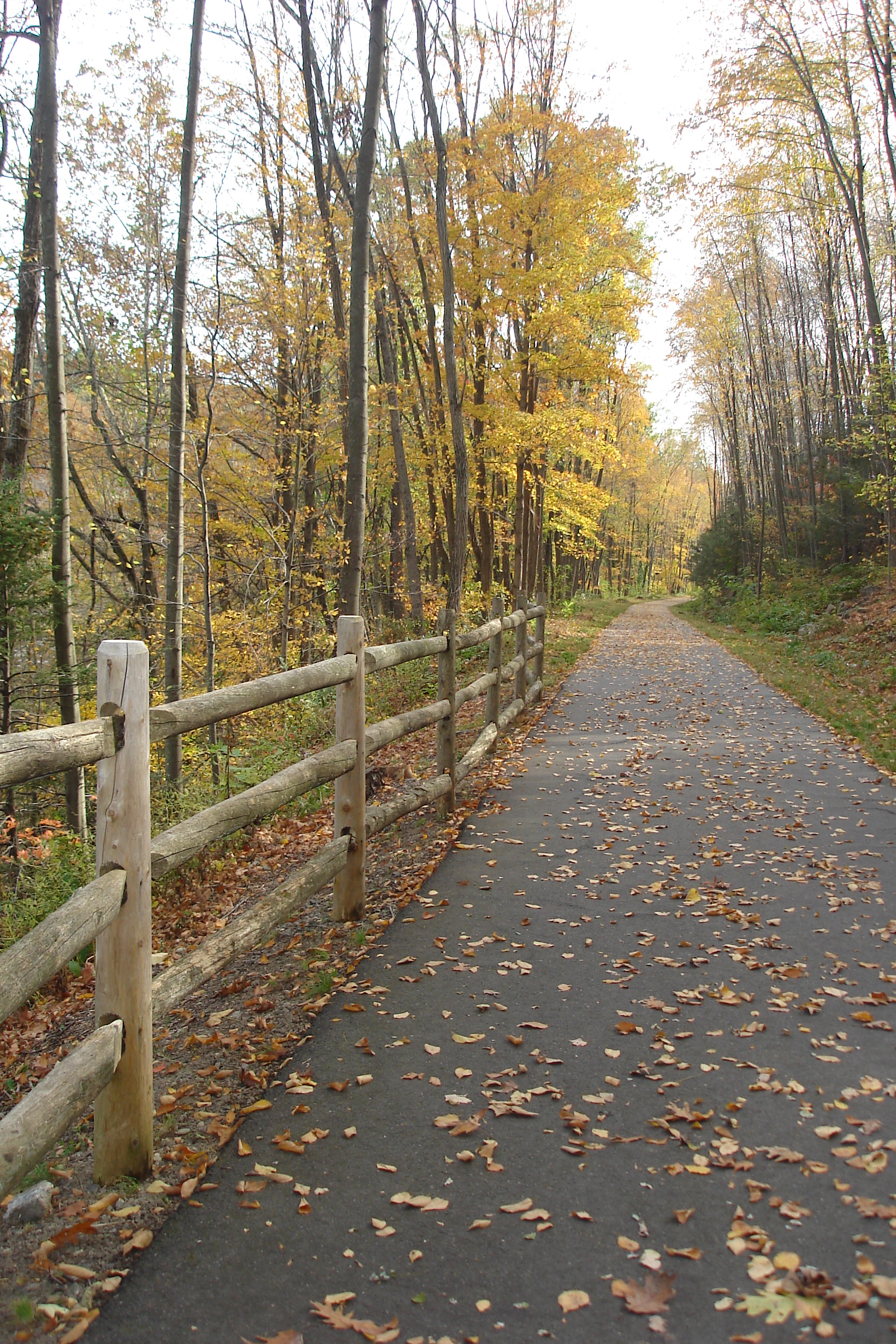
Weekend in New England. It’s become a bit of a tradition, that actually started with my father. He was diagnosed after Labor Day one fall, after a long summer–and spring—of tests and doctors and waiting on results. I don’t recall whether we saw him that summer or not, or if it went by as they do, one long kid-activity poolside summertime blur, but I remember that phone call. It came on the first day of school…the house suddenly empty by 8 in the morning—such a welcome but often bittersweet change, the day we go from full to empty. The day when in the first hour you can’t believe your luck and in the second you start watching the clock for them to come home. This time each September, every passing year. And the phone call ringing into that world—kitchen table still occupied by their last moments—a breakfast dish, a juice glass, new school supplies rejected in favor of tomorrow. Bread crumbs on the counter, dishes in the sink, and me wandering from room to room, listening over the phone to all those doctors’ test results in my father’s calm and quiet voice.
So that fall was the first trip “home.” And my first travelling alone in 20 years, really. Father dying: time to come home. It was so strange. Like I had literally stepped out of time. My sister flew me up with her, out of Charlotte, NC. We went home, never giving it a second thought but also not silencing the irony of expecting our mother, whom he had left three decades years earlier, to put us up. As I recall a brother appeared as well, all the way from California, a bigger deal on the travel end, and completing the three that had once all lived at the end of the hall. And so we were three grown adults sleeping in our childhood beds, still waiting for dad to come tuck us in. Three weddings, eight grandchildren and the thousands of busy, overbooked days in between, we were three siblings together for the first time in decades, gathering for the autumn of our father’s life.
We made the same flight the following year, around the same time of year, when he’d had a year of battling dragons – radiation, chemotherapy, different chemotherapy, clinical trials and applying for clinical trials only to be turned down, lots of waiting. Petitions. More and advanced chemotherapy. Treatment running its course while the cancer ran its. Notice I did not say surgery. The dragons were winning.
Was it on that visit we undid the garden, rolled up hoses, pulled up stakes along with the little wooden slats made and strung by hand that had so faithfully and happily lay between the tomato rows year after year? So much of my father’s world was made by hand. And the rest of it was labeled. He was the god of his universe in a way new generations will never be: making into creation and naming all that is. It felt a sacrilege to undo, but undo we did. We turned under the October ground, returning to earth the last of a harvest which was never picked or enjoyed, the leafy fronds of a squash vine paper thin and singed by frost. Too soon…it all felt so too soon. We rolled the garden hoses gone stiff with cold and rime, unmanageable for the same reason, rolled them carefully in uniform loops and then tied them with twine, labeled their lengths and put them neatly away for–what? Next year? My dad was in a wheel chair on the back porch, going blind from the cancer in his brain, but he was smiling in the late afternoon sunshine streaming into the porch as he called out instructions for the tasks he could not see. The things he, a do-er, could no longer do. We could have been setting it all up and sowing for all he could tell, going the other direction and working him back into life, seed by seed, instead of tearing up those roots. Roots that had grown me strong….The irony and desperation lay just below a frosted surface and we reached it not. It was, as I recall, a surreal experience.
That was five autumns ago, but I have kept coming. Home. This year, it is a slice of unfortunate scheduling that my homecoming weekend is also Sophie’s homecoming at high school. That means I will not be there for rained out football games and rearranged plans, for all the girl primping that will go on amidst boisterous laughter from an upstairs bathroom and the eventual parade—finally!—down our stairs in all their finery and shoes they can hardly walk in. She will send me photos, of course, but there will be a delay, and that dull sense that I have missed something, come after the fact, even if that something was only to stand around in my street clothes and exchange pleasantries with other parents, scoping out the ones with the best camera and trying not to get posed in a shot in jeans and a t-shirt. My trip is very much a “homecoming” minus the fancy clothes and pageantry, as it is the house I grew up in and left in 1989. It is the same small town, a nest of childhood, still with the familiar sites, the spots, the same traces and retraces of a young life lived here—a certain bend in the road, a decades-old pothole, the way a particular curve is banked, a hill we have crested a thousand times or puffed our way up on bikes. Only thing that changes in a small town like this is that all the houses, once mansions in my memory, have grown smaller with time, shrunk to diminutive versions of themselves, and the trees have grown taller, till you find yourself thinking, Why, I don’t remember living in these woods…
Mom and I do fall things in a fall setting: make new soup, defrost old soup, and eat pre-made soup from the day before. Peas porridge hot. Her agenda usually includes purging and passing on. So, in a strange reprise of Octobers past, I help break down the garden pots from her porch, turning their contents, still fully alive, back to earth. Children: the un-gardeners in our lives. I haul pots, and yes—hoses and patio furniture—to their winter lodging spot in a shed and help to sort things that will not hibernate but migrate to the warmer climes of the Goodwill and the Habitat Store. Mom, less a labeler than a liberator. I help with tasks, which after 42 years of running this old country home, the past 31 of them perfectly alone, and the past 10 months with significant health issues, she, a do-er, can no longer do. I haul boxes made heavy by books and tools, my father’s trappings (he left here 30 years ago!!). I break down cardboard for the town compactor, open only on Tuesdays and from the length and intensity of mom’s instructions on how to do it—a pretty easily displeased old cuss. Small towns are full of those. Characters. I clean out closets, help reduce by another swipe the little cache of our life there—old records, boxed hobbies and unfinished crafts, the board games once played, under-used kitchen gadgetry. I try on clothes—a gleeful cast-off of hand-me-downs from the 1980s which I dutifully stuff in my suitcase and may even wear. Laugh if you will, but I have shared this with my lovely, trendy homecoming daughter: on that day when turtlenecks come back into style I will be the envy of all my friends. I won’t have to make do with a couple of worn-out jobbies from the 1980s, as I am actively buying them!
In between the un-nesting we take rides. Rides to the lake to get the stuff we forgot, rides to look for puzzle pieces we somehow lost and also—for those larger losses—a ride to the cemetery to tend and inspect the graves of those who have gone before. We survey the condition of the old stones. This is a centuries-old cemetery, edged in stone walls possibly built by the occupants of the graves: townsmen, farmers, soldiers, patriarchs; They lay beside faithful wives, beloved infants. Mom and I recall with shared humor the time she took out one of the stones coming through here in a car. We look for changes, although for obvious reasons it’s not much fun noting the “developments” of a small-town cemetery. It can never help but hit close to home. This time the newest grave is one of my generation—a high school friend who used to ride the same school bus. Now his grave sits incongruously with those of civil war soldiers, 19th-century family monuments, little children’s headstones that don’t even reach my knee. Over the grave a red maple has spread her ample bosom, slick with rain, and beyond this lie the Connecticut hills like a mantle over all.
After a coffee out of the Colebrook Country Store and the penny candy that now costs a quarter we make our way back past the old white farmhouse and surrounding red barns that have occupied my imagination since childhood. Mill Race Farm: my grandmother’s house, purchased in 1937 as a weekend and summer home for a New York businessman and his family, who handed down in the 60s and 70s to their children a property grander than OZ, more magical than Narnia, a kingdom larger than life. Forty years later, I know every stone in those stone walls, I know every slope and swell of the grassy hills behind the house to the pond, how many steps it takes to arrive, and I bet I could even hike without getting lost through the backwoods to the beaver “darn.” If it even exists still. Time makes meadows of most our streams. I know the rust from the railing and the copper penny placed in the mortar at the bottom step. I was there in 1972 when they repaired the steps and placed that penny—the workmen in their dusty gray work pants straightening up from this and giving the children gathered around the ol’ evil eye, lest we press our fingers into the wet cement. I know the particular yawn of the screen door as it pulls open—and the metallic slap it gives on its way shut. I know the creak of the floorboards in the front hall where the carpet ends as you pass through to the stairs and –perhaps the most sacred spot of all childhood weekends and summer guests to this old home—the hole in the wall at the 4th stair step on the left, a place where a knot in the wood paneling has been worked and pestered free, leaving behind a hole just big enough for the fairies to leave candy in.
Here lives the magic of our childhoods, never packed away for school or a new job, never evaluated under the harsh light of downsizing, when so many old and saved treasures simply cannot stand up for themselves…Here are memories never sold or moved away, but laid down hastily, absently for life elsewhere, and so in this way somehow always running barefoot through the backfield or standing knee-deep in the muck just downstream from the pond catching minnows. To walk these wet fields and ancient meadows is to hear the delighted cries of children playing tag and to catch sight of a firefly’s spark—even in October—that lights the gathering dusk. Soon I will leave this world before it leaves me, as I have left it once or twice a year for the past thirty-five years in a row. Because that’s what children do. I have one of my own this fall, in God’s own magnificent timing, poised at the edge of the nest. All the world lies open before her. I dare not breathe for knowing she will jump into flight, arms wide open. It all feels oh so too soon, and yet somehow, just as it should be. Did my own parents get this clear-eyed a view of me, just before flight? I have been gifted it, by a merciful God and a beautiful daughter, and I do not take it lightly. Instead I savor it, like warm soup, so much better the third time around. There’s just so much in it, this soup-life, to enjoy.
So on the last day of my homecoming weekend I find myself in borrowed gym clothes, packed for the flight and attending a senior’s yoga class in the next town over. Mom’s “heart-healthy” diet has her at a slight size 2—maybe. I haven’t worn a size 2 since I was 2. As for the yoga, I am eager for it, for the day holds two and a half hours of flying and six of travelling. Good idea. And I like being mom’s sidekick, her daughter come home, as she introduces me to this Phyllis or that Doris or a handful of others well my senior. Being with these women, as I have been in past contexts, makes me surmise that life gentles, calms and mellows when this current stage of my life passes and there is no hope of youth. I am already very at ease in the company of women whose hair color I share. My trusty turtleneck, my member’s pass. Nevertheless, I feel about 17. Maybe it is the borrowed clothing, or the strange room, or working out with octogenarians, or all these combined. I think more likely it is being alongside my mom, who is executing yoga poses that would tangle a twenty-year-old, so intently and earnestly that she for a flashing glimpse looks like a child herself. The most towering influence in my life is now about 4″8 and 90 pounds. I could fit her in my suitcase or carry her comfortably like a daypack. We stretch, and breath, and bend, and breathe, and reach and breathe again. I like yoga. I do it at home. So I know how, and the vocabulary and soothing instruction is close to what I am used to. This teacher has that same gentle, suggestive voice, intended, I guess, to propose to these old bods rather than command the various poses. “Maybe this” she coaxes, “and maybe that,” as if I could choose to do something else, like not grow old. As if she is just thinking it up as she goes along. Like me. Like we are all doing, one loaded day at a time. Thinking it up as I go along….
And maybe we are bending to reach, and maybe we are reaching through to grab the other hand and stretch….and maybe we are flexing that leg muscle, and maybe we are leaning…
And maybe we are coming home to make sure they are all still there, the monuments of our youth. And maybe we are knowing they’re not; that they, like all things, are slowly decaying and going back to the soil of our memory. And maybe we are coming home…to say goodbye.


 Souvenirs
Leave a reply to jpettydoc Cancel reply