Last week I drove five teens to a lake house in Massachusetts to visit their grandmother. Two of mine and their three cousins. It is a summertime ritual, time at the lake, part of their earliest memories and made more precious, this trip, by the pandemic. It almost didn’t happen. No one wanted to carry “it” north, flout CDC guidelines or fly in the face of epidemiologists. A few days before leaving we all got tested and then waited on pins and needles and packed bags for one of the best negatives you can get in a time of perpetual “no.” Had we received otherwise it would have been like turning around an aircraft carrier on the New Jersey Turnpike–huge, unwieldy, and all but impossible. Three cousins came to us from North Carolina while my two were busy downloading enough games and music and videos to last the eight-hour car ride. This is what it means when you ask a thirteen-year-old to “think ahead” and “pack carefully”–lots of last minute log-ins to Netflix, YouTube and the like. (Huh? Is there something else I need to pack?) In the twenty years we’ve been making this trek in a kid-loaded minivan, I’ve never made it in less than nine. It’s 383 miles, three major cities (Washington, Baltimore, New York) and (unless you get creative and go the 11-hour “back way”) much of it along hateful I-95.
Personally, I have done it every year since I was exactly the age of my oldest passenger, coming home from Maryland where I moved in 1989. Three decades. I have driven it in all seasons, all conditions. I have driven it with no clutch (spring break 1994, unfortunate automotive mishap, day before leaving), no money for tolls (walked out of the English building at the University of Maryland one day and just decided to drive “home”). I have sat in traffic so backed up you turn off the engine and contemplate picnicking right there on your car hood, traffic that seemed to take years off your life and/or compete with the third reserved for sleep. I have seen countless flat tires, disabled vehicles and life lost in wrecks on the side of the road, along with construction that went on for decades, driving by thinking, What have y’all been doing for the other 364?? Yet, though I’ve crossed over new bridges that weren’t there the year before or had whole roads and exits rebuilt, relocated, it is my passengers who have changed the most. From enraged infants buckled into car seats to potty training toddlers (okay, which of the 16 rest stops in this state haven’t we toured?) like dogs marking their territory at every one, to crayon-snack-and-Lego-spewing kids who make your van look like a party bus, to silent seat warmers whose boredom and misery just leak out of them, to this willing bunch, who may well have turned a corner. It is they who pack the van and ice the water bottles and ready the snack cooler. It is they who locate the fishing tackle, the tennis racquets and finally, strap the bikes to the back. All but one of them could now legally drive the van (and the last, happily if not legally), should I grow weary.
I already know I won’t. For me, this trip will always be a trip home. I left New England thirty years ago, bound for graduate school after a year of trying (unsuccessfully) to live and work under my childhood roof. I had come home from a year in France, lost a beloved grandmother and a family in one summer when my parents divorced, then went back to Europe with a three-month Eurail pass and a week’s worth of clothing (what fits in a backpack) that quickly pared down to a day or two. What’s a girl to do, riding the rails and moving from hostel to hostel —laundry?? I think not. This is when I discovered it takes about three weeks for stains and other obvious wearage to blend into a pair of jeans. What’s the big deal, if the scenery and the company change each day–for Heaven’s sake, on a Eurail pass you can be in a new country for dinner tonight–what difference does it make, the clothes on your back? No one in Austria going to notice you wore that yesterday in Germany. I know where Ellie gets (some of) her minimalism: when I moved to Maryland everything I owned fit in a four-door Dodge Colt because it came from IKEA (yes, a desk and a bookcase!), and every Flat Stanley piece of it came to life as long as you held one critical pocket-sized key: an Alan wrench.
On the morning of our departure, we are only 19 minutes behind schedule, time I’m pretty sure we can make up in flight. Then, as now, I have the sense that I am outrunning something big. We’re on Covid time. The denoument, and the leave-taking of all we thought we would be doing, is complete. Sophie “graduated.” Will–um, ahhh….“finished”? Life in the tent (44 sleeps) climbed in its own bed one night and never looked back. Ellie made it out on the last train to something good. Spring lasted far into June, another item on the heap of weirdness out there, but a welcome one. The humidity came, the windows clapped shut and we started to see that the tsunami of change was receding, leaving us breathless but breathing, heads above water. I take stock. At a glance, this is the window of time to go, if we are going at all. Can I take “summer at the lake” off the calendar? No I cannot, and I swear I will take on that virus in a dark alley if it so much as hints at disaster. Wave two, if wave one ever ends, may be worse than the first. Sure enough, the night before we leave to drive home again, Massachusetts institutes a mandatory 14-day quarantine for people landing from other states. What we made work is, in an instant, impossible. Hey, guys, did someone pack the gratitude? Make sure we got plenty ’cause you never know…
For me, the trip is energizing, at least at the beginning, and presents itself as an enticing challenge in efficient travel. I love a good challenge. I like the idea of raising up a generation who can make quick transitions, live indefinitely out of a duffel bag, and who get that life is fleeting, precarious, so we may as well fly. It’s a beautiful view, there, child. You want to stand there looking at it, or you want to jump? Take nothing for granted. Keep your needs few and your wants non-existent. It’s one of the ground rules of all good travel: This is not about you. Adapt or be left behind. Perhaps quarantine has helped my lesson plan a little. Pack light, gas up the night before, bring food, no stops. Okay, one stop. When Mamie was pleading for this run six weeks ago (since we had nothing better to do than dodge Covid, a full-time job at the time) was to “just pee on the side of the road.” Ok, mom. Thanks. Now who’s stuck in 1972?? I reason that a public restroom along the way will have to do. They may go for my paper map and my audio books (nine discs and 12 1/2 listening hours) but they are not going to go for my apple juice jar. How risky can it be if we all just rush in/rush out, handsfree like doctors into surgery–masks on, gloved hands up–and wash profusely on the way out. No one says much about this plan, although I notice they eye me a little funny and stop sipping water out of their trendy tumblers.
Into the front seat I slip a giant Rand Mcnally Road Atlas. Spiral bound, all fifty states. You think I’m going Google maps on this one? Leave it to technology named after fruit? I, who went to school when it was still school, who have a brain in my head, an “app” if you will, installed by my maker himself? That’s like letting some yahoo at Grammarly tell me what to write. I want to see where I am, as well as where I’m going. I want to know not just the next step, but the possible steps. The alternate routes. How on the earth you going to navigate without options?? I want these young people still in the making to know that location is relative, that your route does matter, that the values you attach to it (fastest, clearest, cheapest, most direct) are not always the ones of greatest value or the ones life will leave unchallenged. I want them to see that the decisions you make at the beginning will most certainly affect the results, and that something that tells you the next step, and only the next step, is not telling the truth. For starters, an epistemological test: Show me where you are. (What? Yes, it’s a paper map. Mock me and I’ll drop you off in Delaware.) Show me where you came from. Can you tell the difference between a boundary and a route? Can you make out the shape of Virginia and North Carolina, mark their boundaries the way the shape of Massachusetts is forever silhouetted in my brain? Can you mark our route? How about an alternate? Then the practical gives way to the educational: Can you name the states we pass through? Can you name the first 13? Can you find all 26 letters of the alphabet on signs and billboards outside this car. Ohhhhh… wait, this car has an outside? To myself I marvel that a standard van battery can power all five iPhones currently plugged into car chargers and still make it up the road. Like, wait a minute, is this vehicle for actual transportation or is it a mobile Matrix charging station ? Just so you know, screen team. Unlike your devices, this here driver will not run out of juice somewhere in New Jersey.
In one sense, the trip itself is an alternate route, a bend in life. Packed into this van are all number of cancelled events they would have had on their busy summer schedules: riding in the front seat, a cancelled mission internship in New Orleans that actually just went down recently, and in the back, a family trip to the DR, a big one, senior year gift to Sophie. We have also managed to fit boy scout camp, several part time jobs, swim team, along with tons of smaller friend times that made up their days prior to March 13. We drive on the same day that Camille, our favorite French exchange student, was scheduled to return to us for five lovely weeks. I know that others have lost much, much more than the opportunities my blessed and privileged children enjoy. I know that people have stopped counting. I also know that their disappointments will not define them but will redirect and deepen them in ways “normal” life could never have done, and like it or not grant them that all-important adaptability. Ah, but we are all well-packed in that.
I was 21 when I first began making this drive. Following the route which was written out on the back of a college acceptance letter my 19-year-old brother (Johns Hopkins) had blazed in his little white Beamer. Did it dawn on anyone that this was a mighty drive to do alone? Maybe not. After all, this was back in the day of Life 365, when you could really get somewhere. I was ten, half the age of these college kids, when I boarded a school bus for the mother of all field trips: a six-week expedition across the country to the Golden Gate bridge and back, camping in state parks and sight-seeing the whole way. Rather eccentric grade school principal who thought outside the box–to say the least!–he took the last four seats out of a “yellow submarine,” installed a fridge and cook stove, taught us to roll our sleeping bags the long way so all 25 would fit, and set out on the open road bound for San Fran. The driver, a big sunburned Swedish fellow who may or may not have been our history teacher, taught us how to use a CB radio and made pancakes so foul we used to dig little holes under the parked bus to bury them. When a bear lumbered into camp one night and left with a loaf of bread–still wrapped–sticking out of its mouth, she left those pancakes untouched. But the taste of wanderlust has stayed with me. I love traveling, the planning and the packing, the anticipating and then the feast of experience laid out by life itself. A little like tent boy, I suppose, the pioneer in me loves the discovery of new lands–all five senses firing, brain fully focused on the here and now instead of five posts/chats/chirps and tweets away. Travel is the antithesis to “virtual” living, which let’s face it existed long before Coronavirus. Mostly I love the self-contained nature, both in terms of what you pack and in what you are: ultimately anonymous in a sea of human concourse, and blissfully free. I have tried to instill both the danger and the serendipity of travel in my people, who have done a fair bit of burning up the roads and skies in their young lives. Because my sister and this crew once lived on the west coast and it’s free to fly a baby under two (and because Richmond is not a direct flight for anywhere we wanted to go), Ellie had made some 48 flights before her fourth birthday. Today she is a fine traveler, patron of public transport and about as self-contained as a girl can be (see “Carry On” – March 2020).
Though my reasonably seasoned traveler-teens don’t need lessons in packing or riding or even timely departures (18 of the 19 minutes were mine), they surely missed on the day they taught Co-pilot. What is wrong with these people? For them, the front seat is for legroom and free access to your own share-free charger, nothing more. Riding not-gun. They are ear-budded stones, and about as useful as a one when it comes to watching for exits, reading the map, digging for tolls–never mind fishing for granola bars or making pleasant conversation. What happened to take care of your driver! Occasionally, I let them in on my sentimental musings as we move increasingly close to home and peck at them occasionally with questions and commentary from an increasingly irrelevant relative they must humor. I drive on, stewing in frustration. Though Google and Apple and every screen-slave in the car wants me to take the route over the George Washington bridge, I refuse. I am trying to reroute using only my brain, as no one and nothing in the van will help me and I am ramped up on safety and precaution with this sort of precious cargo. Consider, people. Imagine. I have made this drive alone, without a cell phone, without money, without a car I was certain could make it, and in recent years I have made it with my favorite people on the planet strapped into seats in the back, as you are now. Do you think for an instant I want to find myself on a double-decker bridge of ancient provenance stacked with bumper to bumper traffic and headed directly into the Bronx?? I don’t care what your app says. I know a better way.
Sometimes my crazy plans and schemes come back to tell me they had a better idea. This one does not. It’s a very, very good idea. After we unload the van and I see there is no Covid there, among our belongings, I breathe a little easier. My insides sigh with prayer. Van is trashed like the days of old but instead of Happy meals and Barbie shoes, now it’s charger cords and electronic paraphernalia (drug metaphor fully intentional — see “Unplugged” summer 2019). For the most part, our masks and sanitizer and the bin I brought of cleaning products will stay untouched. My fears of being an interstate super spreader dissipate with the passing miles. Slowly, the adrenaline rush from rising early for this marathon drive I’ve been plotting and planning for a week, abates and I find myself thinking well, this isn’t so bad. The roads are noticeably clear. We sail through DC and Baltimore, alternately slowing to pay tolls and blow through them, since I forgot the “EZ Pass” electronic transponder. Marvel of modern travel and a costly mistake for this trip. I kick myself heartily when I realize it, hastily scrolling through the problem-solver rolodex in my head as I drive, and then I let it go. We’ll cross that bridge (er, all seven of them) when they come to us. Aaron thinks the bikes on the back may even block the camera visibility. Handy. Maybe that means the cops won’t get a read on us, either. About halfway through New Jersey we make our one multi-purpose stop: fuel and food in, you-know-what out, and in less than 20 we’re back on the road. Need to make the Tappan Zee by three, which we do with time to spare. Listen up, kids. This isn’t a trip. It’s an expedition.
The scenery, albeit some of it highway and miss-able, gives way to more rural and expansive views. After we rattle up the Sawmill Parkway, the Connecticut highways are cut through mountains that knelt undisturbed, for a few million anyway, along the banks of the wide brown Housatonic River. I notice they each look up, look around, not because the scenery is so beautiful but because the road conditions are so poor–thunking and banging over pot holes and metal plates on one of the oldest parkways in the country. Hang on, people, I told you it would be the ride. Says right here in the guidebook that this road is forbidden to trucks, vehicles in tow, and anyone driving on a learner’s permit. Ahhh… those crazy years of the Learner’s Permit. Is there anything more ironic than occupying the passenger seat of your own vehicle trying to teach a young person–who by that point doesn’t much like you and wouldn’t take instruction on any other subject–how to drive when the first place she is going to go is away. I have taught four of my own and two youth groupers, and I have one left who I am sure, when we get there, will have the audacity to think it is he teaching me. (See My Gramma Bought me a Radar Gun– June 2020). Slow down there, son. I can still teach you to drive, and I know your first and favorite destination will also be away. Today, we are learning how to drive home. I, seasoned driver, have plunged headlong into my own childhood at the very end of theirs, a window of time filled with opportunity, with high plans to stuff a few more things in. Because of Covid, I still hold the keys; because of quarantine and limited options, the lake looks awfully good, which is why my invitation got all five. Though I have much, much less ahead of me than do my travelling companions, I see it as my duty to ramp up what they have behind them–which is, in effect, what they have to go on. At some point, probably as we sail over the Hudson river, we will cross the time/space dimension, a state of equilibrium between where you are going and what you leave behind. This is not a trip, my ones. This is a journey. Traveling at the speed of life.
Yes, this was a very good idea. For one, it brings joy, and no kid is ever too old to appreciate that power she has over a grandmother. I think all children relish their ability to achieve just by being. And grandparents remind and reinforce that in their unspoken cherishment, which is why this quarantine is so damaging to the generations. As we pull in between hours eight and nine of our journey, there she is, sitting on the front porch of her little cottage waiting for us. She has not stalked us the whole way on Life 360 or “found her friends,” but she knew. She knew we were close. Connected and continuous, remember? She went back to our starting point and calculated forward by bridges: Two hours from the Tappan Zee, which is two hours from the Delaware Memorial, which is two hours from DC, which is two hours from our “hurry up and get in the car!” She moves slowly and there will be no hugging, no contact, but the essence of the arrival is left intact. It is not distanced at all. Joy. I have delivered five of her eight grandchildren to her doorstep during a global pandemic. In a single drive I have seamed the generations and brought life to the lake. My power makes me heady, too. It is good to be home.
The little house seems to sigh with relief. We made it. Though is a newer house, nestled into the wooded lot where she built it, it has the feel of a much older dwelling. When they were babies we came to a house on the water, with neck-breaker decking and a little dock we would walk down to early, early, to keep those shrill little voices out of a house with no doors. Days starts earlier than birds in a house with “sleeping lofts” (don’t rightly know where to place the emphasis there, but there sure as heck wasn’t much sleeping) rather than rooms. This new little cottage so suits its name: “Robin’s Rest,” a little nest perched at the edge of a wood along a gravel road. In the three summers she has built and feathered it, the property has been transformed: gardens and stonework everywhere, huge flat river rock path leading from the door around the front porch, like a smile.
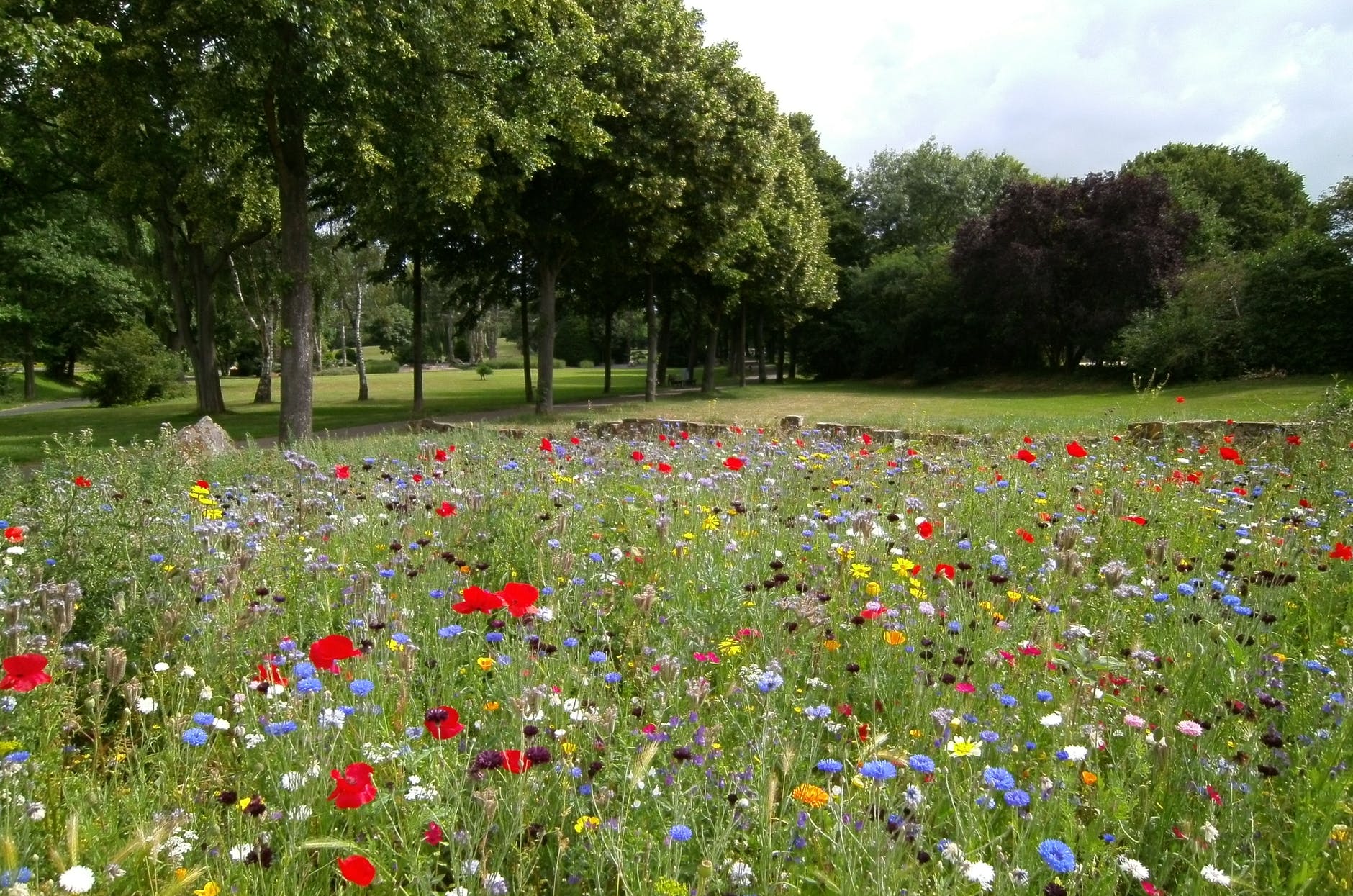
Perhaps the “eternally here” look of the place comes from Mom’s green thumb. It certainly has something to do with her gardening philosophy: rather outspoken on the subject, she landscapes with “native species,” dug hastily and quietly along the roadsides because a more legal trip to Home Depot for imported plants is out of the question. It’s the old “been here/come here” dichotomy of so many communities: They grow best and they grow happiest who originated here. New England soil is rocky, so rocky from glacial traffic those millions of years ago. God forbid I purchase some pretty interloper that wouldn’t grow. On the 14 acres she still manages down the hill, Mom has an “azalea nursery” of bushes–old, like me–that she is coaxing with bone meal and special attention to spread, so she can dig them up and transplant them here. I’ve heard of growling tomatoes from seeds or cheating with sprouts, but azaelas?? Because a 20-minute trip to the lawn and garden store is not even on the radar, but a multi-season enterprise of love and tending is. Like children. Multi-season. Tended well, we transplant surely. One night, moving towels off the patio before a rain, I all but smack the rump of a deer as she grazes right off the corner of the deck. She loves native species, too, and is happily munching away, snapping the tasty heads off what mom just put in the ground that day. I take a seat quietly and watch her graze in the moonlight, feeling the buried roots in me come alive. She is here temporarily, passing through, in a place she has always belonged. And so am I.


 Souvenirs
Leave a reply to jylbear Cancel reply